
Hazardous area classification, explained
Zones, divisions, gas groups and temperature classes decide which equipment may sit in a classified area. IP and NEMA ratings answer a different question.
Hazardous area classification divides a plant into areas according to how likely an explosive atmosphere is to be present, then limits what equipment may be installed in each area. The IEC and ATEX system uses zones 0, 1 and 2 for gases and vapors, and zones 20, 21 and 22 for combustible dust. North American installations use Class and Division, while the National Electrical Code also recognizes a zone method. Either way the classification comes first, and an IP or NEMA enclosure rating does not replace it.
Key takeaways
- Classification describes how often an explosive atmosphere is present. Each device must be suitable for the zone or division where it is installed.
- Zone 0 is the most persistent hazard and zone 2 the least. Division 1 roughly corresponds to zones 0 and 1, and Division 2 to zone 2, but the two systems are not interchangeable on paper.
- The gas group and the temperature class narrow the choice. Hydrogen and acetylene need the most demanding gas group, and the equipment's surface temperature must stay below the ignition temperature of the gas.
- Flameproof, increased-safety and intrinsic-safety designs are different protection methods, each with its own marking and limits.
- IP and NEMA ratings describe ingress and environmental resistance. They do not certify explosion protection.
Classification decides what may be installed
A classified area is one where flammable gas, vapor, mist or combustible dust may be present in a quantity that could ignite. The classification is an engineering assessment, usually recorded on an area classification drawing. It considers the substances on site, how they could be released (flanges, pump seals, vents, open tanks), and how well the area is ventilated. The IEC 60079 series is the family of standards behind it. IEC 60079-10-1 covers explosive gas atmospheres and IEC 60079-10-2 covers explosive dust, according to the Wikipedia summary of IEC 60079.
Once an area is classified, every electrical device placed in it must suit that zone or division, the gas group and the temperature class. A motor, transmitter or junction box that is perfectly sound outside the area can be unsafe inside it. The classification does not depend on the device; the device must be chosen to match the classification.
Zones 0, 1 and 2 under the ATEX system
The European workplace directive, Directive 1999/92/EC, defines the zones in its annex. In plain terms:
- Zone 0: an explosive gas, vapor or mist atmosphere is present continuously, for long periods, or frequently.
- Zone 1: it is likely to occur in normal operation, occasionally.
- Zone 2: it is not likely to occur in normal operation, and if it does occur it will persist for a short period only.
Combustible dust uses zones 20, 21 and 22 with the same logic. The equipment side is covered by Directive 2014/34/EU, which governs equipment and protective systems for explosive atmospheres. The workplace directive decides where the zones apply, and the equipment directive governs what may be installed in them.
Class and Division in North America
OSHA's rules for hazardous locations in 29 CFR 1910.307 recognize Class and Division designations, and also list Class I zone designations. Class I covers flammable gases and vapors, Class II covers combustible dusts, and Class III covers ignitable fibers and flyings.
Division 1 describes locations where ignitable concentrations can exist under normal operating conditions. Division 2 describes locations where they are not likely under normal conditions and would be present only under abnormal conditions, most often a leak. The Wikipedia summary of IEC 60079 sets out the same definitions alongside the zone definitions.
The two systems are often described as approximately equivalent: Division 1 covers zones 0 and 1, and Division 2 covers zone 2. That mapping helps when you read drawings, but it is not a one-to-one substitution for equipment selection. Equipment is certified and marked for one system or the other, and the code applied at the site decides which one governs.
Gas groups and temperature classes narrow the choice
Two more fields matter once the zone or division is known.
The gas group describes how easily a gas ignites and how much energy it takes. The IEC scheme uses groups IIA, IIB and IIC, which correspond roughly to NEC Groups D, C and A and B:
- IIA: propane, equivalent to NEC Group D.
- IIB: ethylene, equivalent to NEC Group C.
- IIC: acetylene and hydrogen, equivalent to NEC Groups A and B.
The temperature class limits the maximum surface temperature of the equipment. T1 allows 450 °C and T4 allows 135 °C. The device's surface must stay below the auto-ignition temperature of the gas present, so a device rated T4 can be unsuitable for a gas whose auto-ignition temperature is lower than 135 °C. Check the substance's data, not just the area's name.
How equipment achieves protection
Three protection concepts cover much of the field equipment you will meet:
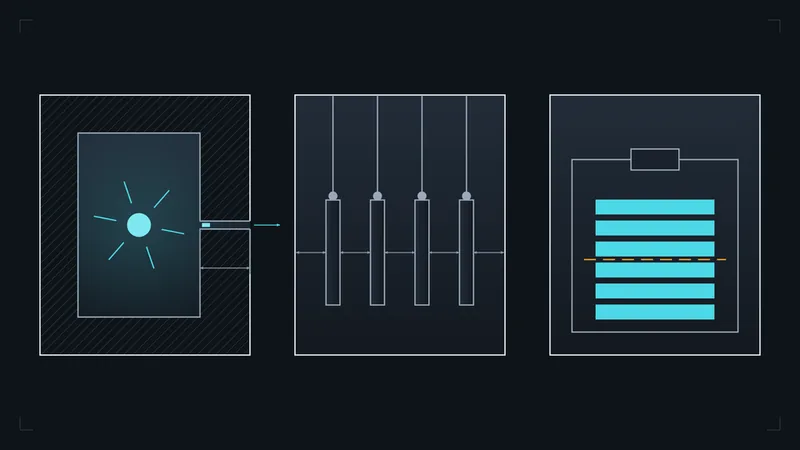

- Flameproof enclosure (Ex d): the enclosure is built to withstand an internal explosion, and a long narrow gap cools escaping hot gases before they reach the outside.
- Increased safety (Ex e): extra clearance and creepage distances, and construction details, reduce the chance of sparks or hot spots in normal operation.
- Intrinsic safety (Ex i): the electrical and thermal energy available in the circuit is limited below the level that can ignite the gas. The intrinsic safety glossary entry gives the short definition.
Intrinsic safety is the concept most instrument engineers meet in practice. Its protection depends on the whole loop, not one device. The field device, the barrier or isolator and the cable must be compatible, and the loop parameters must be checked against the certificates. The same principle now carries into networks: Ethernet-APL is designed around intrinsic safety for zones 0 and 1, with power and data sharing the same two wires.
IP and NEMA are a different question
An enclosure rating says how well a device resists ingress and environmental exposure. It does not say whether the device can contain an explosion.
- The IP code, defined by IEC 60529, rates protection against solid objects and liquids. An IP67 rating covers dust tightness and immersion in 1 m of water for up to 30 minutes under the standard's test. The Wikipedia article on ingress protection ratings explains the code.
- NEMA enclosure types, defined in NEMA 250, describe environmental performance and construction features. Higher type numbers do not automatically include the tests of lower ones. The Wikipedia overview of NEMA enclosure types summarizes the list.
- Neither rating certifies explosion protection. A device can carry a high ingress rating and still be unsuitable for a classified area, and a certified device may still need a higher ingress rating for a washdown environment.
The IP rating glossary entry and the NEMA rating entry cover the basic definitions. For panels, the control panel design basics guide matches enclosure rating to location as one of the checks before installation.
Read the marking, then the classification
The marking on certified equipment identifies the protection method, the gas or dust group, the temperature class and the zone or equipment category it is certified for. Compare each element with the area classification, not the other way round. If the marking is missing, or the certificate does not match the device revision, treat the device as unverified until the documentation is resolved.
Flow instruments are a common place where the classification constrains the design. The industrial flowmeter selection guide lists hazardous-area classification among the installation checks that can decide between technologies, alongside straight runs and whether the process can be stopped.
A practical sequence for projects
- Obtain the approved area classification drawing and identify the release sources in the process.
- Record the gas group and temperature class of each substance from its safety data sheet.
- Select each device for its zone or division, gas group and temperature class, and check the marking against the certificate.
- Where intrinsic safety is used, design the loop and record the barrier parameters.
- Verify installation, markings and seals during factory and site acceptance, using the FAT and SAT checklist template. Update the classification documents when the process changes.
For the instrumentation context, the process instrumentation learning path connects sensor, transmitter and loop decisions. Where a protective function is needed beyond control, the safety instrumented system basics article explains the boundary between control and protection.
Frequently asked questions
Are zones and divisions the same thing?
No. They describe the same underlying idea with different structures. Zones 0 and 1 roughly map to Division 1, and zone 2 to Division 2, but equipment is certified for one system, and the code applied at the site governs. Use the approved classification documents, not a conversion table.
Does an IP67 device work in zone 1?
Not by itself. IP67 describes ingress protection. Suitability for zone 1 depends on the explosion-protection marking, the gas group and the temperature class. A device needs an appropriate explosion-protection certificate and a suitable ingress rating.
Does intrinsic safety remove the need for area classification?
No. The classification still determines which equipment and protection level are needed in each area. Intrinsic safety is one way to make a circuit suitable for a classified area, and it depends on the loop design and the barrier parameters.
Can a standard motor run in a zone 2 area?
Only if it is certified or otherwise suitable for that zone, gas group and temperature class. A general-purpose motor is not automatically safe because an area is less hazardous. Check the marking and the documentation, and involve the site's competent person.
What does the temperature class mean?
It sets the maximum surface temperature the equipment may reach. The surface must stay below the ignition temperature of the gas in the area. T4 allows 135 °C and T1 allows 450 °C, so a more restrictive class suits a gas with a lower ignition temperature.
Who decides the classification?
A competent person applying the site's procedures and the applicable standard decides, normally with process engineers who know the substances and release sources. The result is a documented area classification that engineering and inspection can check.
Related reading
- Gauge R&R: how much variation is the gauge?: checking that measuring instruments give trustworthy readings.
- Control panel design basics: layout, wiring, and what inspectors check: enclosure ratings matched to the location.
- Safety instrumented systems: the boundary between control and protection: protective functions beyond the area classification.
Cite this page: Hazardous area classification, explained
, Shopfloor, 2026-10-18. https://shopfloorspace.yunusemrevurgun.com/articles/hazardous-area-classification-zones-divisions/